











Key Takeaways
Traditional Thai massage relies on firm pressure, deep stretches, and targeted acupressure, all of which call for caution in the first 12 weeks of pregnancy when miscarriage risk is naturally at its highest. Most Bangkok therapists trained in prenatal care will either decline first-trimester bookings or heavily modify their technique, defaulting to gentle, prenatal-style work with medical clearance from the second trimester onwards. For a pregnancy-safe treatment, choosing the right day spa in Bangkok is the most important step.
Traditional Thai technique relies on firm pressure, deep stretches, and targeted acupressure. These are exactly the elements most healthcare guidance flags as needing extra caution across Thai massage pregnancy in the first trimester. Fatigue and shoulder tension are common in the first trimester, making a familiar Thai massage an ideal way to reset. Still, it’s common for Bangkok spas to politely reject you, and there are good reasons for this. It’s useful to grasp the “why.”
Is Thai Massage Safe in the First Trimester?
Traditional Thai massage sits at the intense end of the massage spectrum. Practitioners apply assisted stretches, joint mobilisation, and firm acupressure along the body’s energy lines, closer to a partner-supported yoga session than a relaxation massage. The technique’s effectiveness for stress and stiffness stems from its intensity, but this same intensity is also concerning during early pregnancy.
The first 12 weeks are the highest-risk window for miscarriage regardless of any external factor, so trained therapists apply a precautionary standard rather than a proven-harm one. Research on massage while pregnant in the first trimester is limited, so guidance leans on caution. Therapists in Bangkok specializing in prenatal care typically avoid first-trimester appointments or make considerable changes to their approach for this reason.
Which Pregnancy Massage Is Safe During Each Trimester?
Prenatal massage and gentle Swedish-style massage sit at the opposite end of the spectrum from traditional Thai massages and are better suited for pregnancy in the first trimester. Both use light strokes, supported positioning, and steady rhythm rather than deep pressure or joint stretches. Prenatal-trained therapists also adjust posture and cushioning specifically for pregnant clients, usually side-lying with pillows for support.
Reputable clinics default to side-lying or supported positioning after pregnancy confirmation. Abdominal and lower back strain makes face-down positions inadvisable, and in later pregnancy, face-up positions are restricted to avoid pressing on the vena cava.
However, during the first trimester of pregnancy, it’s advisable to steer clear of or adjust techniques like deep tissue, sports massage, hot stone, and intense shiatsu-style acupressure. Even a gentle treatment requires a therapist with specific prenatal training, not just a modified standard massage.
What Areas Cannot Be Massaged During Pregnancy?
Certain regions and pressure points call for particular caution across every trimester. Here is a list of areas to avoid for a safe session.
- Abdomen and sacral region. Direct, deep work on the belly or lower back is avoided, especially before the second trimester. Light, superficial contact only, if any.
- Legs and ankles. Firm pressure raises real concern for anyone with visible varicose veins or a higher clotting risk. Pregnancy already increases blood volume and clotting factors, so aggressive leg work should be avoided.
- Ankle and inner calf points. Certain acupressure points here are associated with uterine stimulation in traditional systems. Trained therapists avoid strong pressure at these sites regardless of debate about their actual effect.
During the session, it’s recommended to apply light to moderate pressure. However, if you feel dizzy, sick, or experience sharp pain, stop immediately. Information on the pregnancy is required by the therapist before they start treatment.
What Gentle Massage Looks Like After the First Trimester
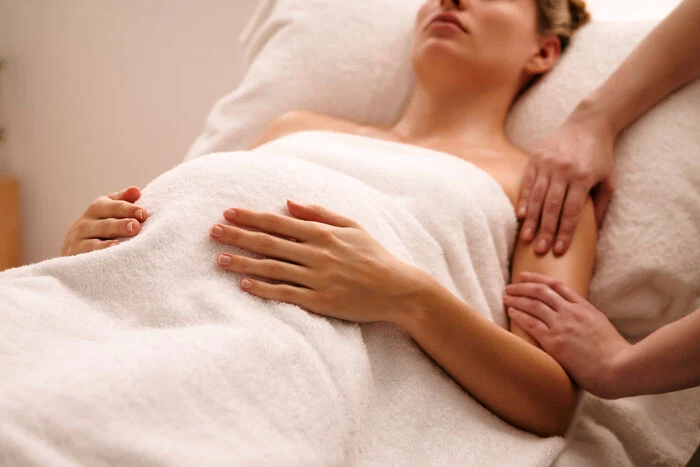
Once past the first trimester, you can enjoy a safe and appropriately delivered massage once again. A gentle massage brings real benefits:
- Reduced muscle tension across the back, shoulders, and hips
- Better circulation and less swelling in the legs
- Lower stress hormone levels
- Better sleep.
his gentler method provides these benefits safely through soft, flowing strokes instead of firm pressure, calming organic oils, supported side-lying positions with cushions and bolsters, and shorter, more attentive sessions as opposed to the extended intensity of a traditional Thai massage.
As such, a Thai massage’s benefits are best pursued after the pregnancy window of the first trimester rather than during the first 12 weeks itself.
Note: Medical clearance from an obstetrician or midwife remains the first step regardless of how gentle the treatment sounds, particularly if you’re experiencing a high-risk pregnancy, bleeding, severe nausea, or other complications.
How to Choose a Safe Pregnancy Massage Provider in Bangkok
Not every spa in Bangkok sets the same eligibility bar for pregnancy clients, so choose the right provider with some key considerations in mind.
- Check therapist training. Ask specifically about the therapist’s prenatal-massage training, not general spa experience. A good therapist can explain how their approach adjusts trimester by trimester.
- Ask before booking. Cover the minimum week the spa will accept, what positioning they use, and which techniques or areas they avoid for pregnant clients.
- Confirm the eligibility window. Many Bangkok spas set their own policy rather than following a citywide standard, and windows vary widely, so confirm directly rather than assume.
- Loop in your healthcare provider. Speak to your obstetrician or midwife first, especially with complications, a high-risk pregnancy, or uncertainty about which massage style suits you.
The Personalised Approach to Pregnancy-Safe Massage at White Wood Green
White Wood Green offers a personalised approach to pregnancy massage across two boutique branches in Bangkok. Every treatment is designed around your preferences, comfort, and what your body is holding on the day, with technique adjusted around trimester and medical guidance.
Our Restorative Pregnancy Massage is a 60-minute treatment built around soft, flowing movements and calming organic oils rather than firm Thai-style pressure or stretching. It is recommended for mothers who are four to six months pregnant, in line with the first-trimester caution outlined above rather than treating early pregnancy as ordinary spa time.
Visit our Ekkamai branch for the treatment, where a hidden urban oasis awaits, designed like a cozy countryside barn. Please confirm medical clearance with your obstetrician prior to booking.
Book Your Pregnancy-Safe Massage at White Wood Green
Traditional Thai massage’s firm pressure, joint stretches, and specific acupressure points are the elements that call for caution in the first trimester of pregnancy, when miscarriage risk is naturally at its highest regardless of massage. If you’re after a massage, sticking to gentler, supported-position treatments, careful avoidance of the abdomen, lower back, and specific leg and ankle points, and clearance from an obstetrician is the safer path until the second trimester.
At White Wood Green, our Restorative Pregnancy Massage puts this caution into practice with a gentle 60-minute treatment of soft, flowing strokes and organic oils at our Ekkamai branch. It is recommended for guests who are four to six months pregnant, allowing you to enjoy the benefits of a massage with ease of mind.
Explore our Thai massage pregnancy options with White Wood Green today. Our therapists deliver a gentle, personalised session designed for expecting mothers past the first trimester, with treatment adjusted around your comfort on the day.
Book online or via Line @wwgspa to plan your visit to our day spa in Bangkok. Don’t hesitate to reach out to our team if you have any questions or concerns.
References:
Prenatal Massage: Benefits, Types and What To Expect. Retrieved on 29 July 2026 from https://health.clevelandclinic.org/prenatal-massage
Pregnancy and Massage. Retrieved on 29 July 2026 from https://www.webmd.com/baby/pregnancy-and-massage