







Key Takeaways
- An onsen relies on geothermal, mineral-rich hot springs rooted in Japanese tradition, whereas hydrotherapy is a structured system using controlled hot, warm, and cold pools for physical recovery.
- Contrast hydrotherapy (alternating between warm and cold water) actively pumps blood through muscle tissue, reducing post-workout soreness and inflammation far more effectively than a single hot soak.
- Soaking in warm hydrotherapy pools prior to a massage softens tight muscle tissue, enabling your therapist to work deeper with less discomfort.
- Located in Sathon, White Wood Green’s Yenakart retreat features an onsen-inspired thermal suite with hot, warm, and cold plunge pools set against garden views.
For many individuals, hydrotherapy has become a self-care routine, a way to repair, rebuild, and reset the body and mind. Water, after all, has been central to human restoration for thousands of years, as a way to cleanse and as a medium for deep healing.
Hydrotherapy takes the concept of a quiet bath and turns it into a purposeful self-care ritual. By using temperature and water buoyancy, hydrotherapy can directly affect your nervous system. The warmth calms and eases mental stress, while the cool plunge sharpens focus and invigorates tired senses. It can help calm physical pain, lower stress, and prepare your mind to receive deeper care.
This article discusses the difference between an onsen vs. hydrotherapy, and how hydrotherapy works at a spa like White Wood Green. If you are stepping off a long flight or soothing sore muscles after work, taking time to rest at a wellness spa in Bangkok offers a well-deserved respite.
What Is An Onsen? Its Meaning, Origins, and Ritual
If you are wondering what an onsen is, let us look at the literal translation: the onsen meaning in Japanese breaks down to “hot spring.” Specifically, the term describes natural geothermal springs heated beneath the Earth’s surface, as well as the traditional bathhouses, ryokans, and inns built around those thermal waters. A traditional onsen relies on volcanic activity to heat spring water and enrich it with naturally occurring minerals like sulfur, magnesium, calcium, and iron. These minerals give the water its distinctive feel, aroma, and therapeutic properties.
Cultural Role & Bathing Etiquette in Japan
In Japan, visiting an onsen is a quiet, mindful ritual rooted in purification and community. The tradition follows a clear, respectful sequence: Guests thoroughly wash and rinse their bodies at seated shower stations before entering the water. Bathing takes place in near-total silence, allowing everyone present to soak without distraction.
Primary Health Benefits
The restorative qualities of a traditional onsen come down to three natural factors:
Thermal Heat: Expands blood vessels, eases circulation, and relaxes tight muscle tissue.
Buoyancy: Reduces effective body weight, lifting pressure off load-bearing joints.
Mineral Content: Soothes sensitive skin, reduces mild inflammation, and encourages deep, unhurried rest.
What Is Hydrotherapy at a Spa?
While an onsen centres on natural hot springs, what hydrotherapy is at a spa comes down to deliberate, controlled water temperature and pressure. Hydrotherapy is the targeted application of water across a full thermal spectrum, ranging from hot pools (39°C–41°C) and warm baths (34°C–36°C) to cold plunges (16°C–17°C), hydro-jets, and contrast circuits.
Rather than relying purely on passive relaxation, hydrotherapy acts as a structured physical treatment. By manipulating water temperature, therapists and guests can trigger specific, predictable physiological responses within the circulatory, muscular, and nervous systems.
Physiological Applications & Pain Relief
Hydrotherapy treatment has been proven effective for joint stiffness, chronic back pain, and post-workout fatigue. The temperature you choose directly shapes how your body responds:
Warm & Hot Water: Dilates blood vessels (vasodilation), increases oxygen delivery to fatigued muscles, and softens rigid connective tissue. It works best for persistent tightness, desk-bound postural strain, and general stress.
Cold Water: Constricts blood vessels (vasoconstriction), slows nerve signalling to dull acute pain, and reduces localised swelling. It works best for immediate post-exercise soreness and joint inflammation.
Hydrotherapy Vs. Onsen: Where the Two Actually Differ
When comparing hydrotherapy vs. an onsen, the overlap often confuses people because both involve soaking in soothing water. However, the fundamental difference comes down to origin, temperature range, and intent.
What is the Difference Between an Onsen and Hydrotherapy?
Is hydrotherapy the same as an onsen? No, hydrotherapy is not the same as an onsen, but an onsen is considered a traditional and natural form of heat hydrotherapy. The difference lies in how the water is sourced and used. An onsen is a Japanese geothermal hot spring bath centred on warm soaking and mineral absorption. Hydrotherapy, on the other hand, is an aquatic recovery practice that incorporates cold plunges, hydro-jets, and contrast bathing alongside warm soaking to achieve specific health outcomes.
Hydrotherapy for Muscle Recovery After Exercise
Is hydrotherapy good for muscle recovery after a workout? Using hydrotherapy for muscle recovery has long been a go-to method for athletes, runners, and active individuals looking to bounce back after tough training sessions. Heavy exercise causes microscopic tears in muscle fibres, leading to fluid buildup, inflammation, and delayed-onset muscle soreness (DOMS).
Hydrotherapy can accelerate muscle recovery by actively regulating blood flow. By alternating between warm and cold immersion, you stimulate circulation, help clear metabolic waste from fatigued muscles, and supply fresh, oxygenated blood to repair strained tissue.
Which Is Better for Muscle Recovery: Onsen or Hydrotherapy?
When deciding which is better for muscle recovery: onsen or hydrotherapy? The latter comes out on top for active physical repair. While a single hot onsen soak feels wonderful and helps soothe tired joints, it lacks the cold element needed to manage acute inflammation. Without a cold plunge to constrict blood vessels, warm water alone can sometimes leave overworked muscles feeling slightly heavy or swollen immediately after intense exercise. Hydrotherapy’s structured temperature changes directly target post-workout soreness.
If you are planning a broader self-care day across the city, you might pair an intense recovery session with a massage at our spa retreat, where peaceful garden views and attentive service complement your treatment.
How Hydrotherapy Enhances the Effects of Other Spa Treatments
Hydrotherapy does not replace a skilled massage therapist, but it makes their work vastly more effective. Soaking beforehand sets the stage, ensuring your body receives the full benefit of every stroke, stretch, and pressure point.
Pre-Massage
Preparation of the Muscular System: Soaking in a warm pool for 15 to 30 minutes before your bodywork completely changes how your muscles respond to manual therapy
Softening Tense Tissue: Heat increases muscle elasticity. When your muscle fibres are warm and pliable, your therapist can reach deeper knots with less resistance and far less discomfort.
Calming the Nervous System: Warm water lowers cortisol levels and eases your heart rate, helping you transition out of “fight or flight” mode before you even step onto the massage table.
Post-Massage
Extending Relaxation: A gentle soak after your massage keeps your muscles soft and prevents the post-treatment stiffness that sometimes follows deep tissue work.
Supporting Lymphatic Clearance: Warm thermal water keeps blood circulating freely, helping your body process metabolic waste released during deep muscle manipulation.
White Wood Green’s Onsen-Inspired Hydrotherapy
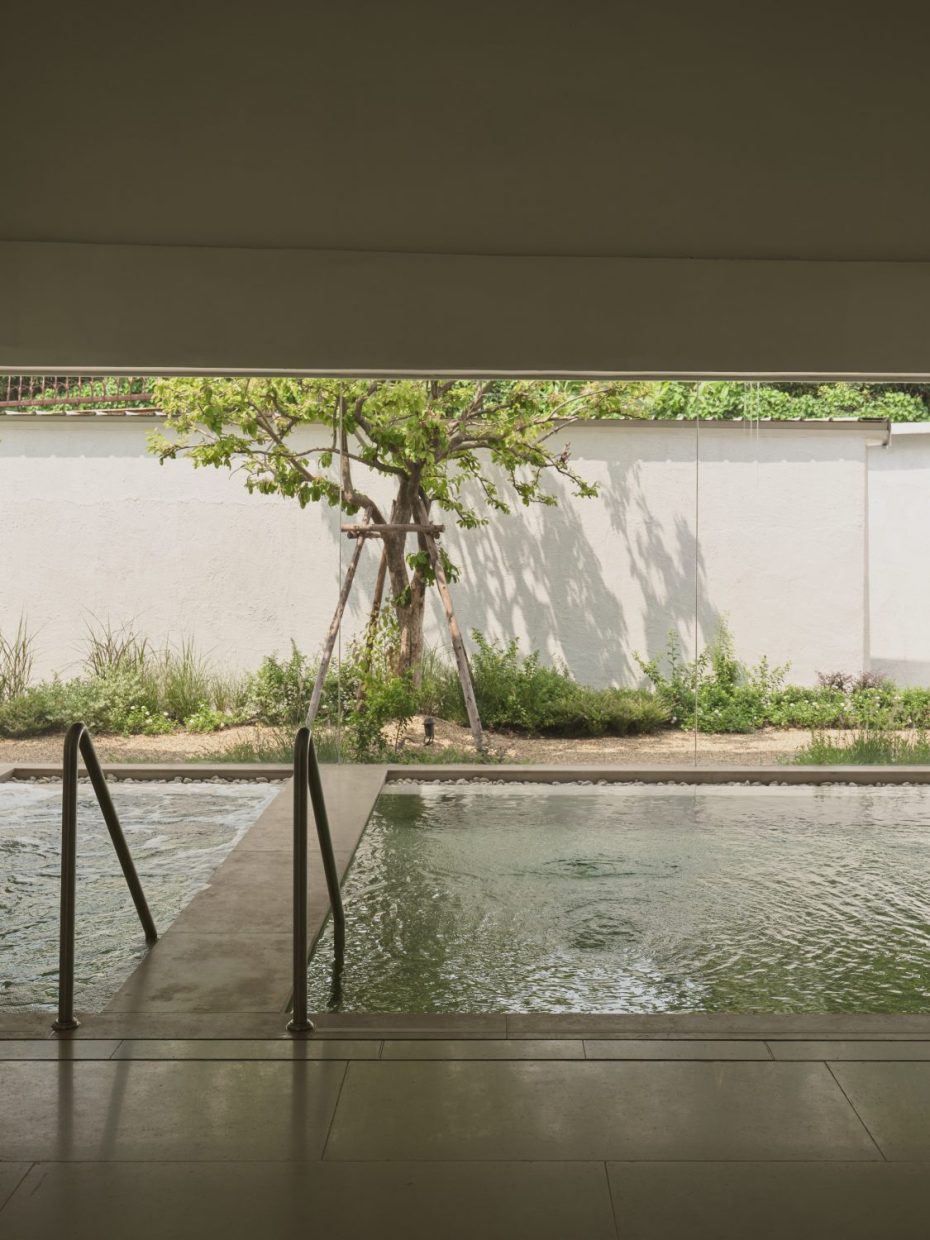
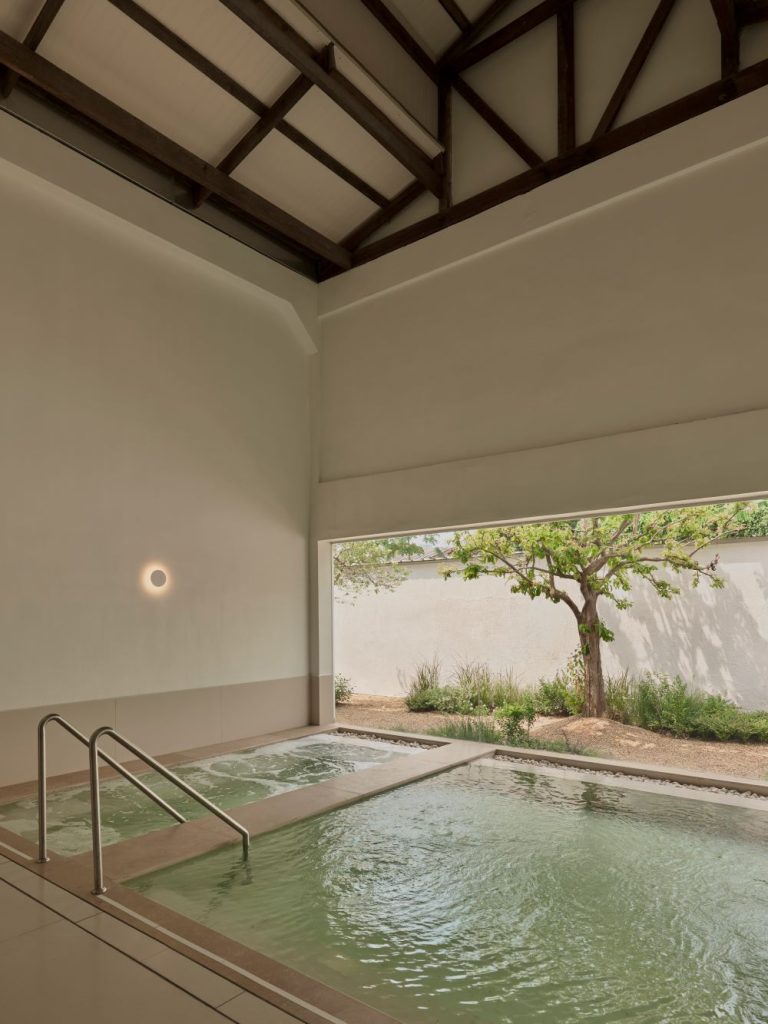
Our wellness spa in Sathon features a purpose-built hydrotherapy suite. Surrounded by lush greenery, our thermal facility brings together architectural minimalism and structured contrast bathing.
Our sequence features three calibrated garden-view baths:
- Hot Bath (39°C–41°C): Opens circulation, warms stiff joints, and relaxes deep-seated tension.
- Warm Bath (34°C–36°C): Eases the body into quiet balance and calms the nervous system.
- Cold Plunge (16°C–17°C): Constricts blood vessels, closes pores, and invigorates tired muscles.
Enjoy silence, space, and exclusive access to our hydrotherapy pools, a premium men’s sauna, and a women’s steam room, all within the serene surroundings. Access our hydrotherapy with a public one-day pass (750 Baht) or private session (1,200 Baht per hour, per person). You can also opt to add hydrotherapy to your scheduled spa treatment for 400 Baht and have a fully rejuvenating experience. Discover how structured thermal contrast can transform your physical recovery. Discover our hydrotherapy experience at White Wood Green (Yenakart) or have a luxury spa massage near Sukhumvit at White Wood Green (Ekkamai) today.
References:
Hydrotherapy. Retrieved on 27 July 2026 from https://my.clevelandclinic.org/health/treatments/23137-hydrotherapy
Hydrotherapy and Water-Based Spa Treatments: A Complete Guide to Healing and Relaxation. Retrieved on 27 July 2026 from https://wellbeing-spa.com/hydrotherapy-and-water-based-spa-treatments-a-complete-guide-to-healing-and-relaxation/
Benefits of Hydrotherapy. Retrieved on 27 July 2026 from https://mephysio.com.au/blog/benefits-of-hydrotherapy/